+86-571-22917799



 English
 简体中文
简体中文 русский
 Español
Content
- 1 What "PVC Coated Oxford Fabric" Actually Means
- 2 What the Coating Adds to the Base Cloth
- 3 Reading a PVC-Coated Oxford Specification Sheet
- 4 PVC or PU? Matching the Coating to the Job
- 5 Where PVC-Coated Oxford Fabric Earns Its Keep
- 6 Customising PVC-Coated Oxford for Your Programme
- 7 Questions Buyers Ask Us Most Weeks
- 8 Working With a Mill That Controls the Whole Chain
PVC-coated oxford fabric sits at a practical crossroads in modern textiles. It starts life as a woven polyester or nylon cloth, usually a plain weave with two yarns in the warp and one in the weft, and then receives a layer of polyvinyl chloride bonded to one or both faces. The result keeps the dimensional stability, printability and tensile strength of a woven fabric while gaining the waterproofness, abrasion resistance and structural rigidity that PVC is known for.
At Hangzhou Gaoshi Luggage Textile Co., Ltd. we have been weaving and coating oxford fabric since 2002, and PVC-coated oxford has been one of our steadiest product families for just as long. This guide shares what we have learned on the mill floor: how the fabric is built, how to read the numbers on a specification sheet, and how to match the right construction to the bag, tent or cover you are developing.
What "PVC Coated Oxford Fabric" Actually Means
Oxford cloth takes its name from a weaving tradition rather than from a fibre. It is a basket-weave or plain-weave structure, normally woven from filament polyester (DTY or FDY) or nylon, and recognised by its fine, slightly granular surface. The word "oxford" describes the weave family; the denier figure in front of it, whether 210D, 420D, 600D or 1680D, describes how thick the individual yarns are.
PVC coating happens after weaving. A paste made of resin, plasticiser, stabiliser, pigment and filler is spread onto the cloth and then cured in an oven. Depending on the order, we can apply it to a single face or to both, and we can control how deeply the paste penetrates between the yarns. That penetration matters more than most buyers expect, because a coating that sits entirely on the surface behaves differently in hand feel, fold memory and tear strength from one that is partly driven into the weave.
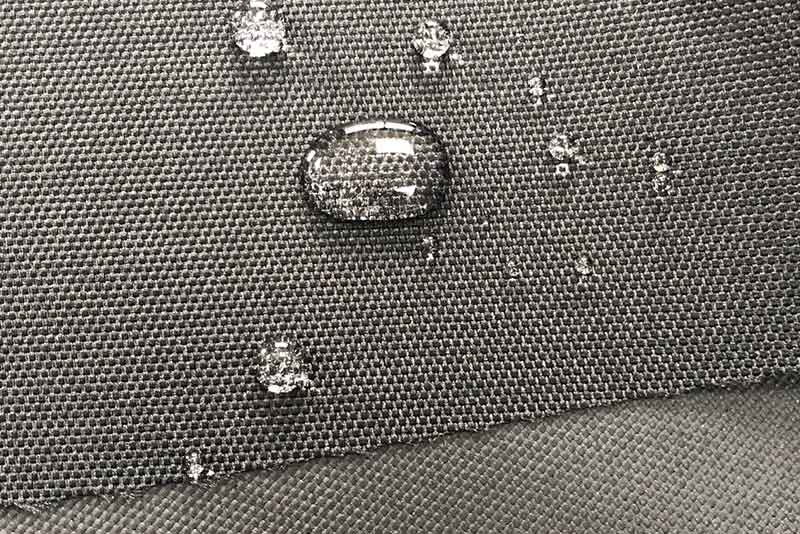
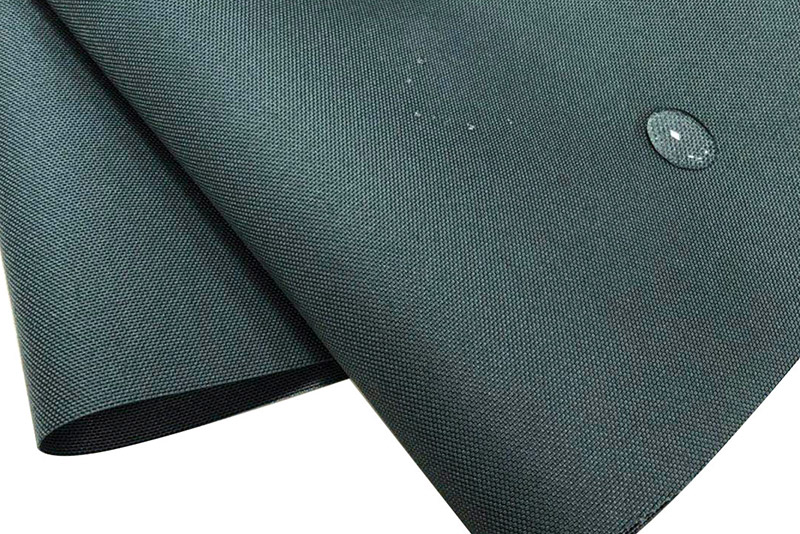
Two characteristics follow from this chemistry. First, PVC is inherently waterproof, since it forms a continuous film rather than a finish that depends on surface tension. Second, it is comparatively heavy and stiff, which is exactly what you want in a bag that has to hold its shape on a retail shelf, or in a cover that must stay flat in strong wind.
What the Coating Adds to the Base Cloth
Compared with an uncoated oxford or a fabric that relies only on a water-repellent finish, a PVC-coated construction brings a specific set of advantages:
- Reliable water resistance. The film blocks liquid water outright, so performance does not fade as a repellent finish gradually washes out.
- Abrasion and tear resistance. The coating binds the yarns together, so a small cut is far less likely to run.
- Shape retention. Panels stay flat and edges resist curling, which simplifies cutting, sewing and packing.
- Dimensional stability. The cloth resists shrinking and stretching during stitching and heat exposure.
- Surface versatility. PVC accepts embossing, printing and colour matching, so the same base cloth can serve many looks.
- Cost efficiency. For the protection delivered per square metre, PVC remains one of the most economical coating options available.
Reading a PVC-Coated Oxford Specification Sheet
When a buyer sends us a requirement, four details usually decide whether the cloth will work in production. Here is how we explain each one.
Denier: the thickness of the yarn, not the cloth
Denier measures grams per 9,000 metres of yarn, so a 600D yarn is roughly twice the thickness of a 300D yarn. Heavier denier generally means higher tear and tensile strength, and it also produces a stiffer, more substantial hand. Our PVC-coated range runs from 300D through 1200D, with 600D the volume workhorse for backpacks, duffels and tool bags.
Weave: plain, twill, ripstop or jacquard
A plain weave gives the most uniform surface and the most predictable coating adhesion. A twill weave adds a subtle diagonal line and drapes a little more softly. Ripstop constructions introduce a thicker yarn at fixed intervals (2mm, 3 to 5mm, 6mm and 7mm grids are common), which stops a tear from travelling across the panel. Jacquard and two-tone weaves are usually chosen for appearance rather than for mechanical performance.
Coating weight and adhesion
Coating weight is quoted in grams per square metre and typically sits between 80 and 250 gsm for PVC. A heavier coating means a thicker film, better hydrostatic resistance and a heavier finished roll. Adhesion deserves equal attention: a coating that can be peeled away by hand will fail along the fold line long before the film itself wears through.
Surface finish and colour
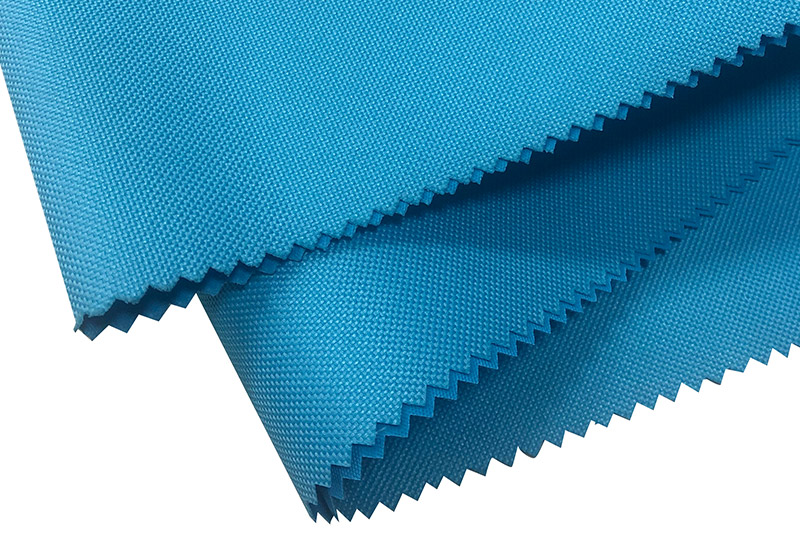
PVC can be produced glossy, matte, embossed or printed, and colour can be matched against a physical swatch or a Pantone reference. Because the coating is pigmented rather than dyed, batch-to-batch colour variation is usually tighter than with piece-dyed fabric, which matters when several shipments have to sit on the same shelf.
If you are starting from a common specification, a standard 600D PVC-coated oxford is often the quickest way to validate a new bag or cover design before moving to a custom construction.
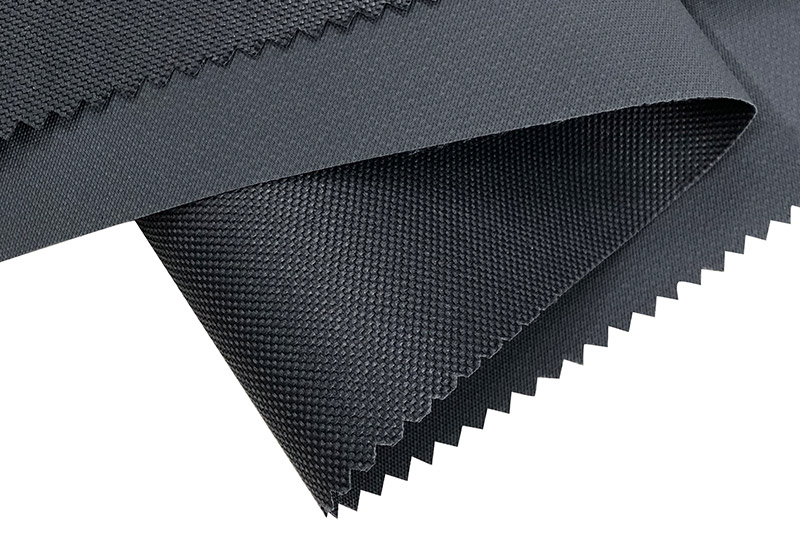
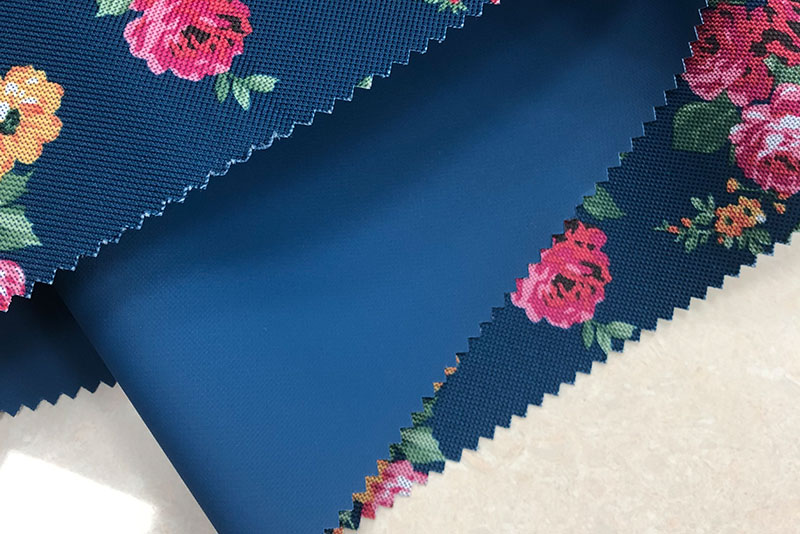
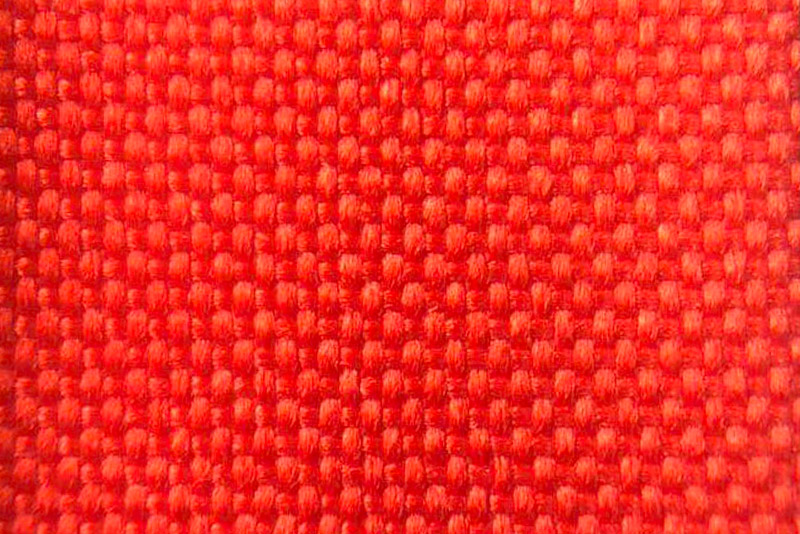 PVC COATED Oxford Fabric 60060068PVCAdditional InformationView Product →
PVC or PU? Matching the Coating to the Job
Both coatings make oxford fabric waterproof, but they are not interchangeable. The table below summarises the trade-offs we discuss most often with customers.
| Property | PVC Coating | PU Coating |
|---|---|---|
| Water resistance | Continuous film, very high | Good to high |
| Hand feel | Firm and stiff | Softer, more flexible |
| Abrasion and tear | Strong, yarns locked together | Good |
| Added weight | Higher | Lower |
| Low temperature | Can stiffen further | Stays flexible |
| Cost per square metre | Usually lower | Usually higher |
| Typical use | Bags, covers, tarpaulins, tents | Apparel, light bags, soft luggage |
As a rule of thumb, choose PVC when the product needs structure, maximum water protection and a competitive price, and choose PU when softness, light weight or a quieter surface matters more than rigidity.
Where PVC-Coated Oxford Fabric Earns Its Keep
The applications we ship every week tend to fall into a handful of groups:
- Luggage, backpacks and tool bags, where stiffness helps a bag stand upright and the film keeps rain out.
- Tents, awnings and camping gear that need a genuine waterproof barrier rather than a repellent finish.
- Outdoor furniture covers, boat covers and machinery covers exposed to sun, rain and grit.
- Industrial tarpaulins, truck side curtains and temporary shelters.
- Pet mats, stroller canopies and protective or medical carry bags.
For luggage programmes in particular, we build a dedicated PVC-backed luggage fabric around the same principle: a heavy oxford base plus a PVC layer thick enough to survive conveyor belts, kerbs and airport handling. When a project calls for something heavier than the usual 600D, an 840D construction with a substantial PVC film is often the natural next step.
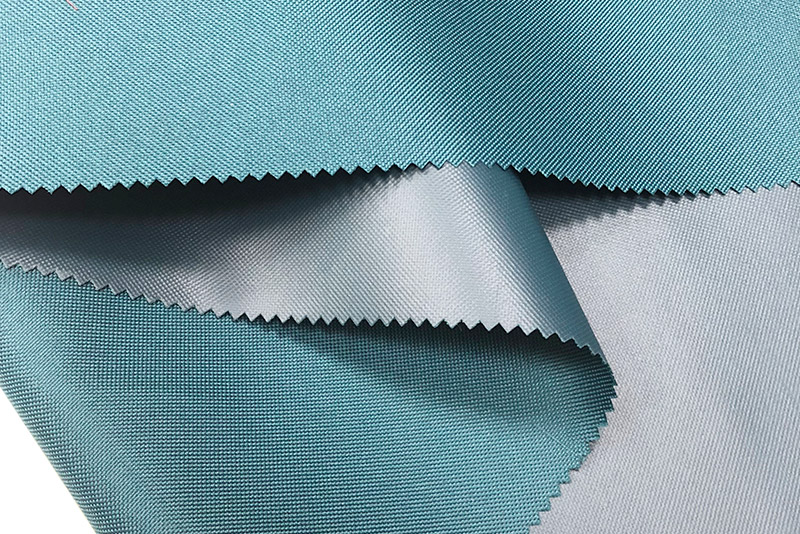
PVC-backed luggage fabric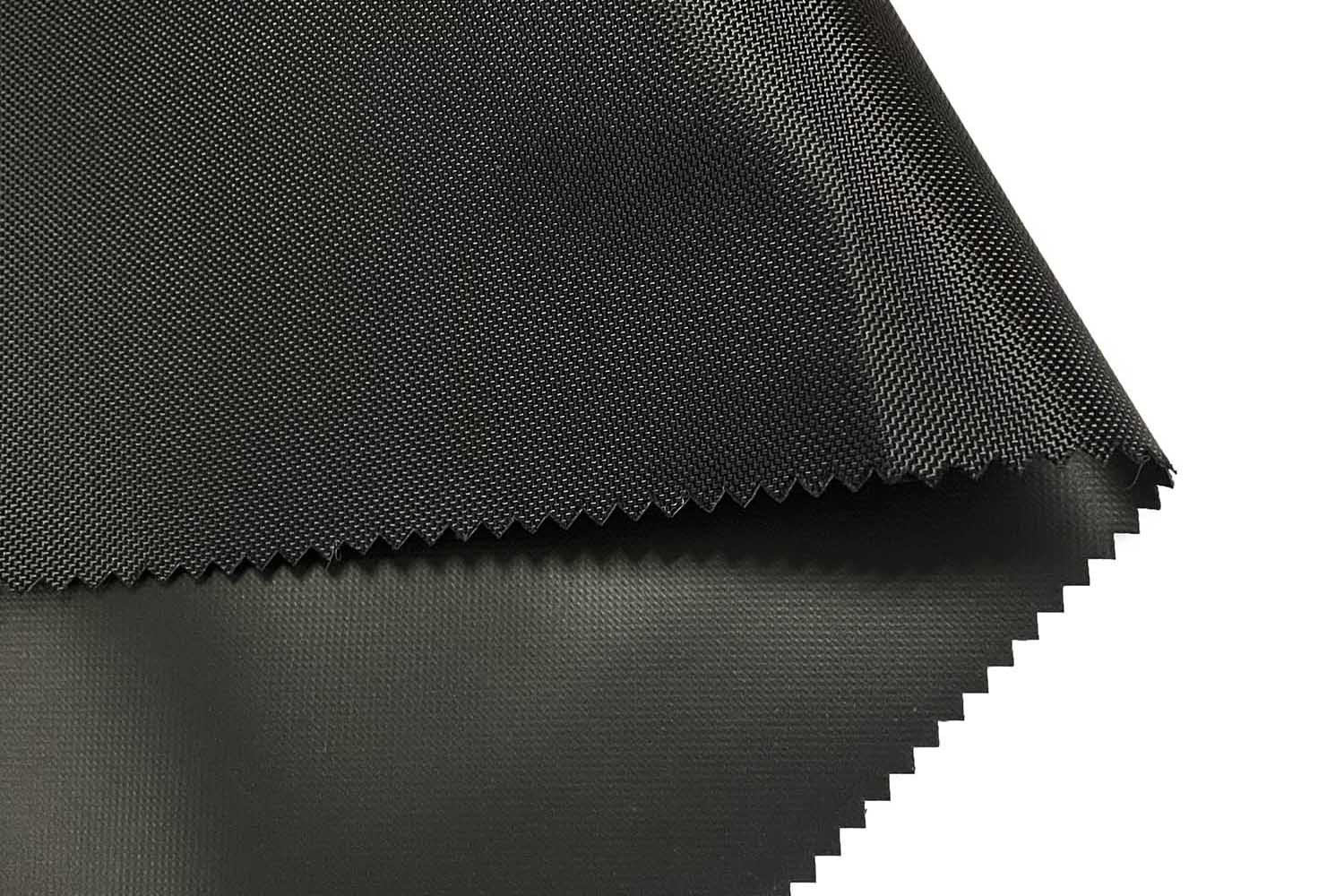 840D Fabeic With PVC CoatedAdditional InformationView Product →
Customising PVC-Coated Oxford for Your Programme
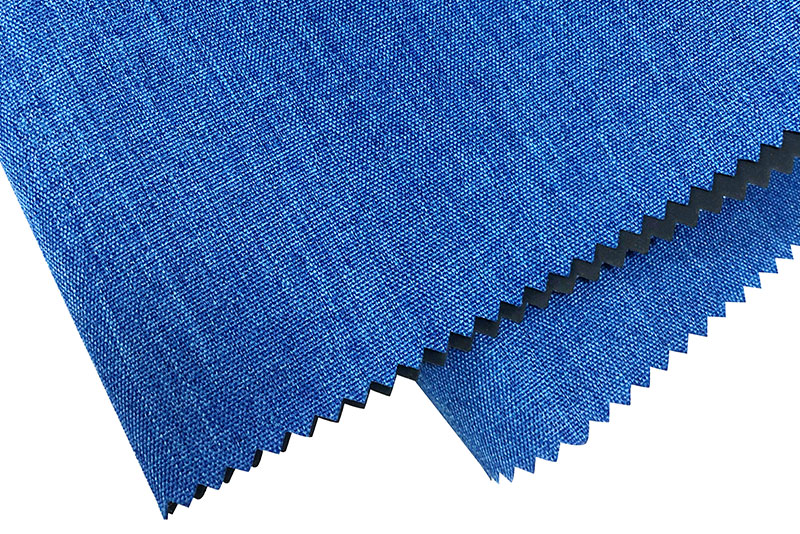
Most of our orders are not catalogue items. Buyers come to us with a target gram weight, a colour reference and a list of performance requirements, and we build the cloth around them. The variables we adjust most often are yarn denier, weave structure, coating weight, surface finish and colour.
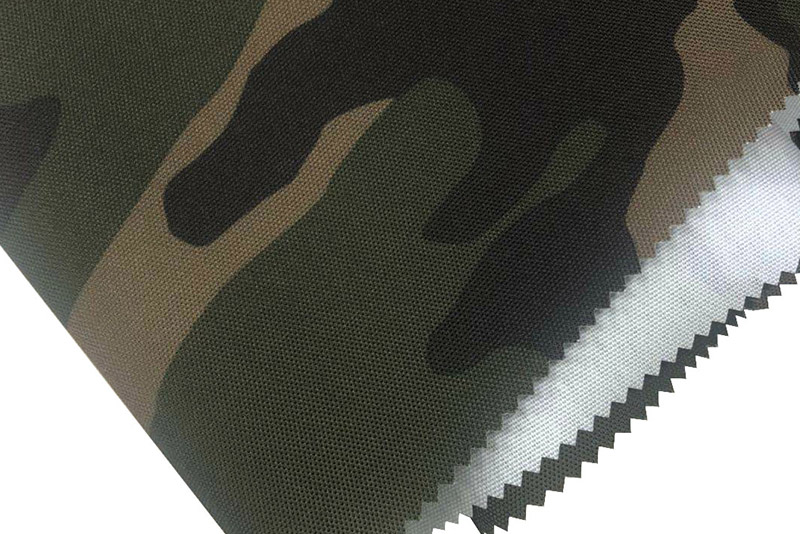
Beyond the coating itself, functional finishes can be added: flame retardancy for tent and event structures, anti-static treatment for industrial and protective applications, and UV stabilisation for anything that will live outdoors. Print is another route, whether that means camouflage, a geometric pattern or a brand-specific design developed from your artwork.
When a customer's target weight does not match any existing article, we can develop custom-weight oxford fabric and run a sample for approval before bulk production. Because we control yarn, weaving, printing and coating under one roof, changes to one variable do not require renegotiating the whole supply chain.
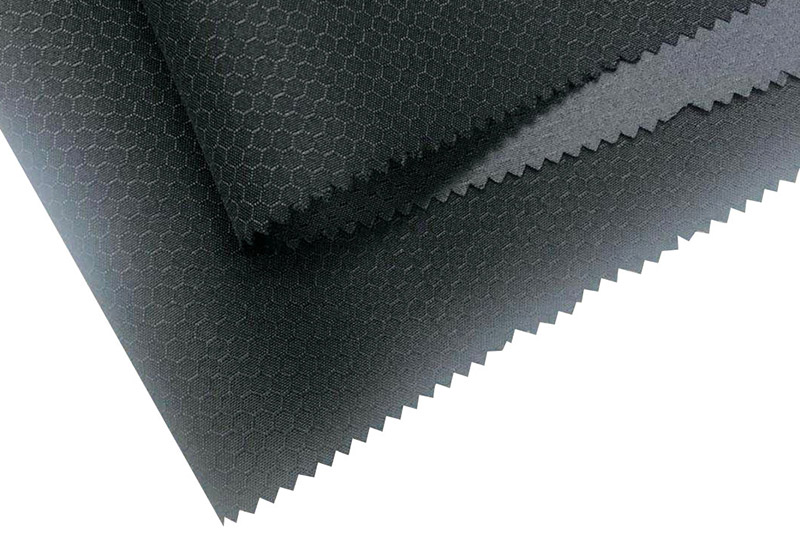
custom-weight oxford fabric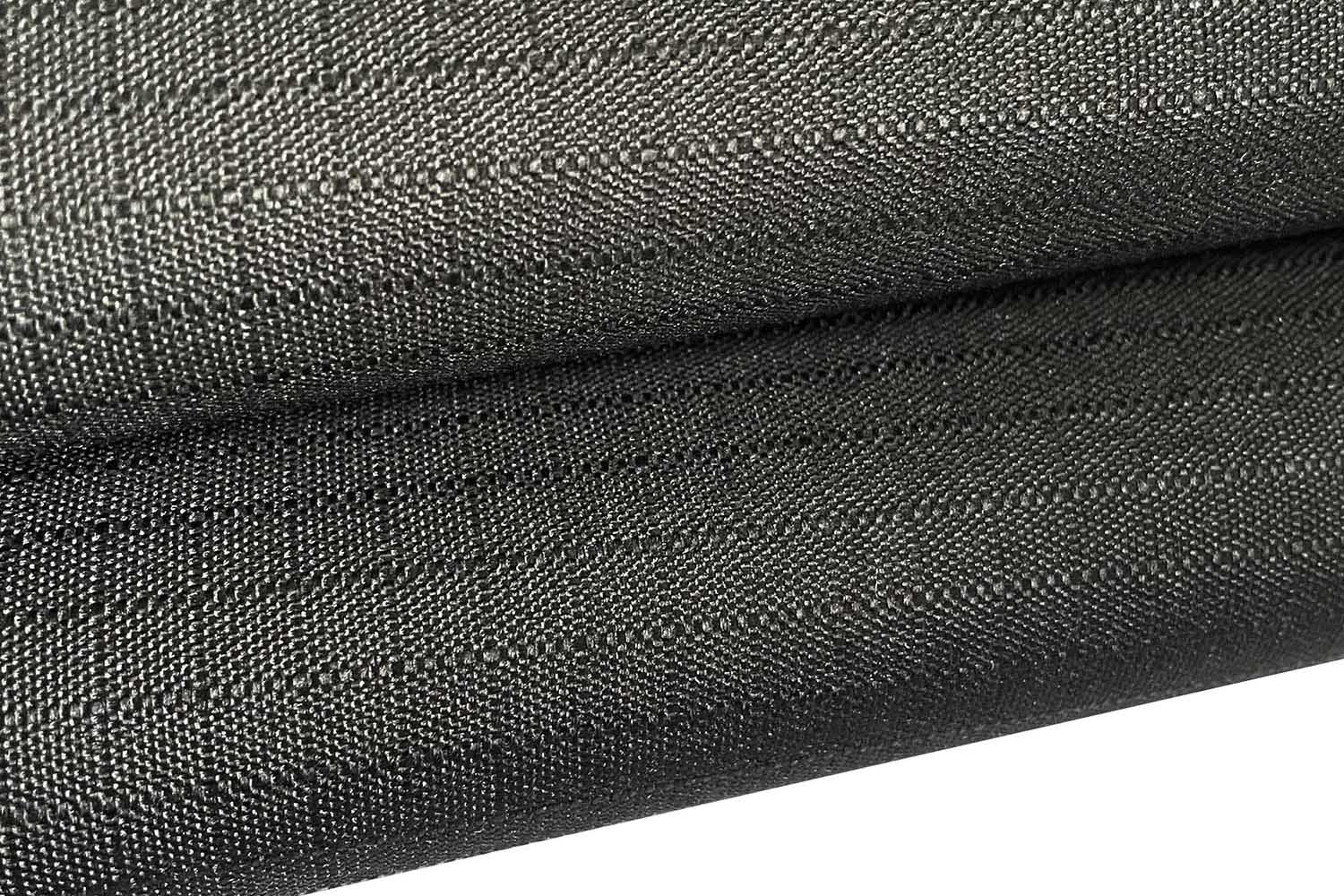 Ripstop-7MM With PVC CoatedAdditional InformationView Product →
Questions Buyers Ask Us Most Weeks
Is PVC-coated oxford fabric completely waterproof?
A continuous PVC film does not let liquid water pass. Whether a finished bag is fully waterproof depends just as much on the seams, zips and stitch holes, so we usually discuss those alongside the fabric choice.
Can PVC-coated fabric be printed or embossed?
Yes. Both processes are applied to the coating surface, and we can match a print or texture to a reference sample before committing to a production run.
How should the finished product be cleaned?
Warm water, a soft cloth and a mild detergent are usually enough. Abrasive brushes, solvents and prolonged heat should be avoided because they dull the coating surface.
Working With a Mill That Controls the Whole Chain
Oxford fabric is a deceptively simple product. The difference between a roll that sews cleanly for three years and one that delaminates in a warehouse usually comes down to small decisions made at the yarn, loom and coating line. That is why we keep yarn texturing, weaving, printing and coating in the same facility, with inspection at each stage and an annual capacity of around 30 million metres.
We are based in Hangzhou, close to Xiaoshan International Airport and within easy reach of the Ningbo and Shanghai ports, and we have been exporting to South America, Eastern Europe, Western Europe and South Asia for more than a decade. If you are specifying a PVC-coated oxford for a new bag, tent or cover, send us the target denier, weight, colour and performance requirements. We will tell you honestly what is achievable, what it will cost, and how long it will take.

 Tel: +86-571-22917799
 Fax: +86-571-82799678
 E-mail:
 Add: No.88 Yinxin Rd.,Yaqian Town,Hangzhou City, Zhejiang, China.