+86-571-22917799




 English
 简体中文
 русский
 Español
Content
- 1 What Oxford Fabric Actually Is
- 2 Why the Denier Number Does Most of the Talking
- 3 Coatings and Backings: Where the Real Difference Lives
- 4 Weave and Pattern: The Part Buyers Underrate
- 5 Where Oxford Fabric Earns Its Keep
- 6 How We Would Narrow Down a Specification
- 7 Sustainability, Care and the Paperwork
Oxford fabric is one of those terms everybody in the trade uses and almost nobody defines the same way. Ask a shirt maker in Europe and you will hear about a soft cotton basket weave. Ask a backpack factory in Southeast Asia and you will hear about 600D polyester with a polyurethane backing. Both answers are right. The word has simply travelled a long way from where it started.
We have been weaving and coating polyester oxford in Hangzhou since 2002, and we run our own yarn, weaving, printing and coating equipment on a site that turns out roughly thirty million metres a year. Most of what follows is the version of the story we give to new buyers — the parts that actually cause problems on a production line, and the parts that actually move the price.
What Oxford Fabric Actually Is
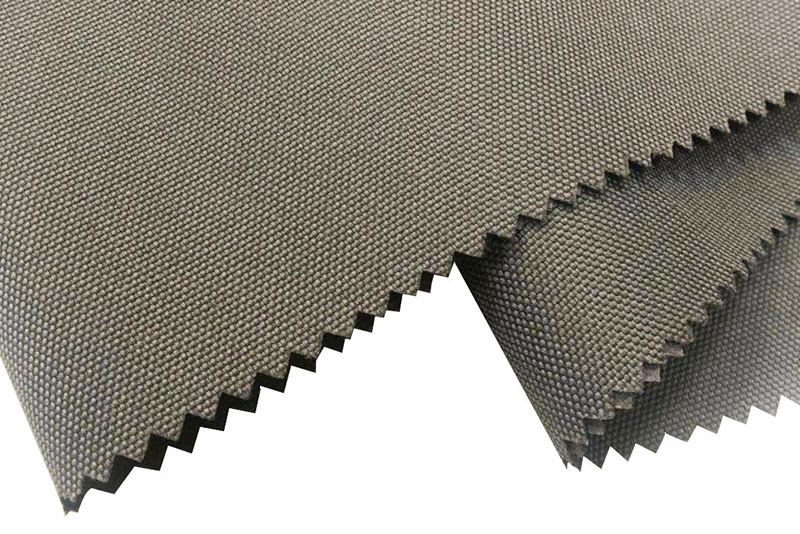
Historically, oxford cloth was a cotton fabric woven in a basket pattern, where two warp yarns cross two weft yarns instead of the usual one-to-one. That small change gives the surface a fine, slightly granular, marled look and a bit more loft than a plain weave. It came out of nineteenth-century Scottish mills and borrowed its name from Oxford University, where the cloth became a favourite for button-down shirts. That is the reason an "oxford shirt" means what it means today.
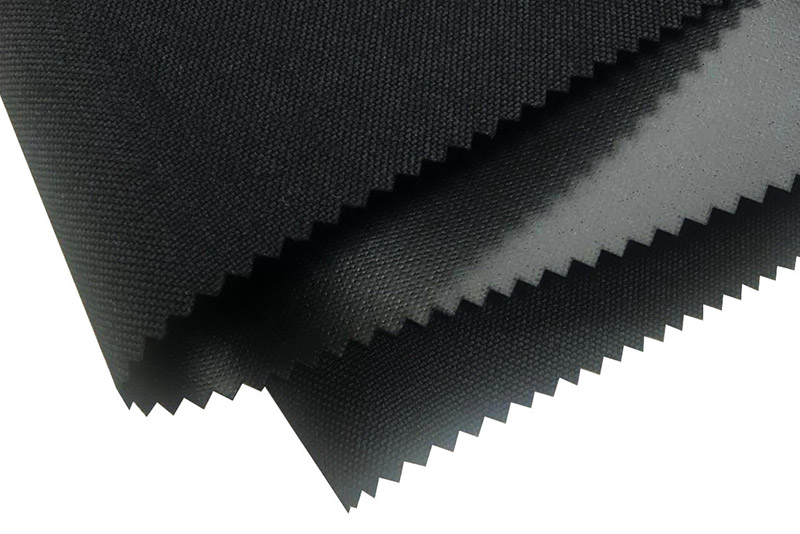
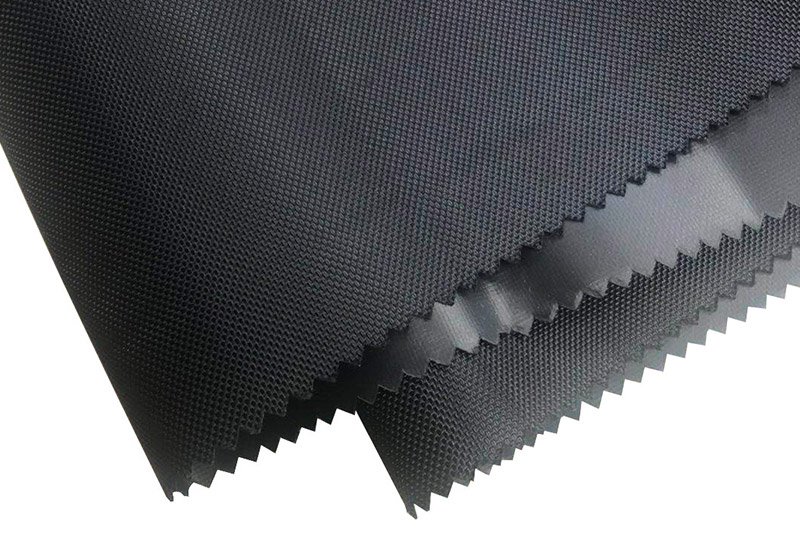
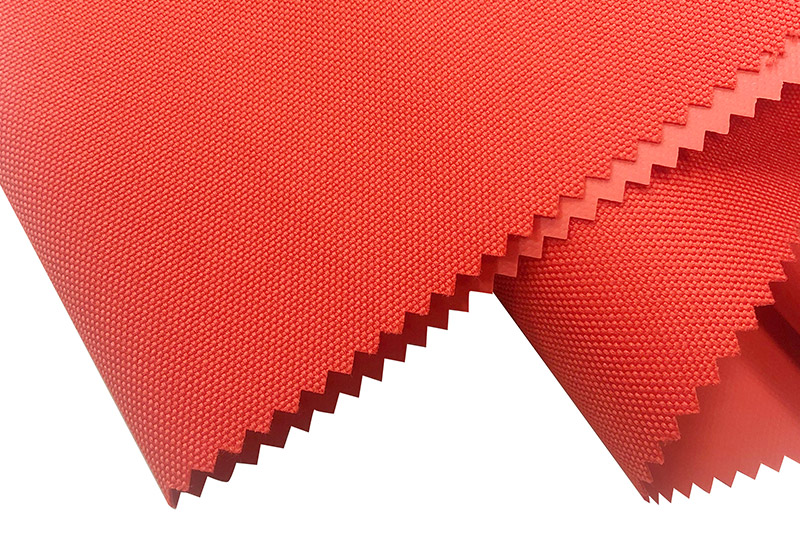
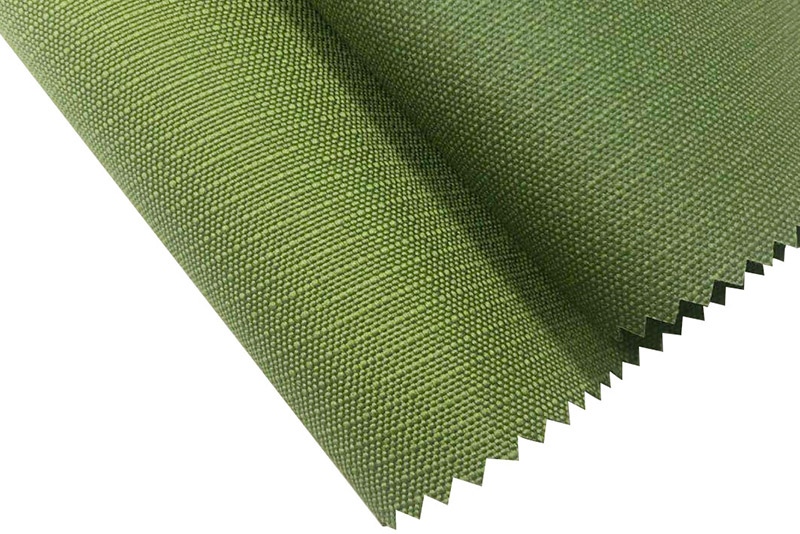
The textile industry then borrowed the word for something quite different. When filament polyester and nylon became cheap and reliable, weavers found that a similar two-by-one or two-by-two basket construction produced a fabric that was strong, dimensionally stable and inexpensive to finish — everything luggage needs. In the bag trade now, "oxford fabric" usually means a woven polyester fabric somewhere between 300D and 1680D with a coating on the reverse.
So the honest definition is a structural one. Oxford is a basket weave. That said, a good deal of what is sold under the name today is technically a plain weave given an oxford-style hand through yarn choice and finishing, and in commercial conversation nobody argues about it.
Why the Denier Number Does Most of the Talking
Denier measures yarn weight: one denier is one gram per nine thousand metres. A 600D fabric is built from 600-denier yarn, which is thicker and heavier than 300-denier yarn and noticeably tougher. It is only half the picture, though. Thread count — the "T" figure you will see written as 600D 68T or 600D 90T — describes how densely those yarns are packed, and it changes both the hand feel and the tear strength far more than most buyers expect.
| Denier | Typical finished weight | Hand feel | Where it usually ends up |
|---|---|---|---|
| 300D | 150–200 gsm | Light and packable | Daypacks, linings, lightweight gear |
| 420D | 200–260 gsm | Soft but solid | School bags, promotional bags, laptop sleeves |
| 600D | 260–340 gsm | The all-rounder | Backpacks, duffels, travel luggage |
| 900D | 340–420 gsm | Firm and abrasion resistant | Tool bags, trolley cases, equipment bags |
| 1200D | 400–500 gsm | Stiff, industrial | Tarpaulins, machine and equipment covers |
| 1680D | 550–700 gsm | Very heavy, ballistic style | Premium luggage, motorcycle and tactical gear |
600D remains the workhorse for a simple reason: it is the point where durability stops being a compromise and cost is still comfortable. If you are sourcing in volume, our 600D oxford fabric wholesale page sets out the standard builds we keep in regular production.
Coatings and Backings: Where the Real Difference Lives
Two fabrics can both read "600D PU" on a purchase order and behave like completely different materials, because the coating is doing an enormous amount of work. This is the part worth pinning down in writing.
PU coating
Polyurethane gives a softer, quieter, more flexible result and takes colour well. It is the default for bags that will be folded, stuffed and handled. Water resistance is usually quoted as a hydrostatic head — 1000mm, 1500mm, 2000mm or 3000mm — and higher numbers come from thicker coating or multiple passes. Two passes cost more but resist abrasion on the inside of a bag far better than one.
PVC coating
Polyvinyl chloride is heavier, stiffer and more waterproof per unit of thickness, and it can be high-frequency welded rather than stitched — a real advantage for tarps and waterproof compartments. The trade-offs are weight, a firmer hand, a plastic feel in cold weather and less pleasant folding behaviour. It is also the cheapest way to get a genuinely waterproof back face.
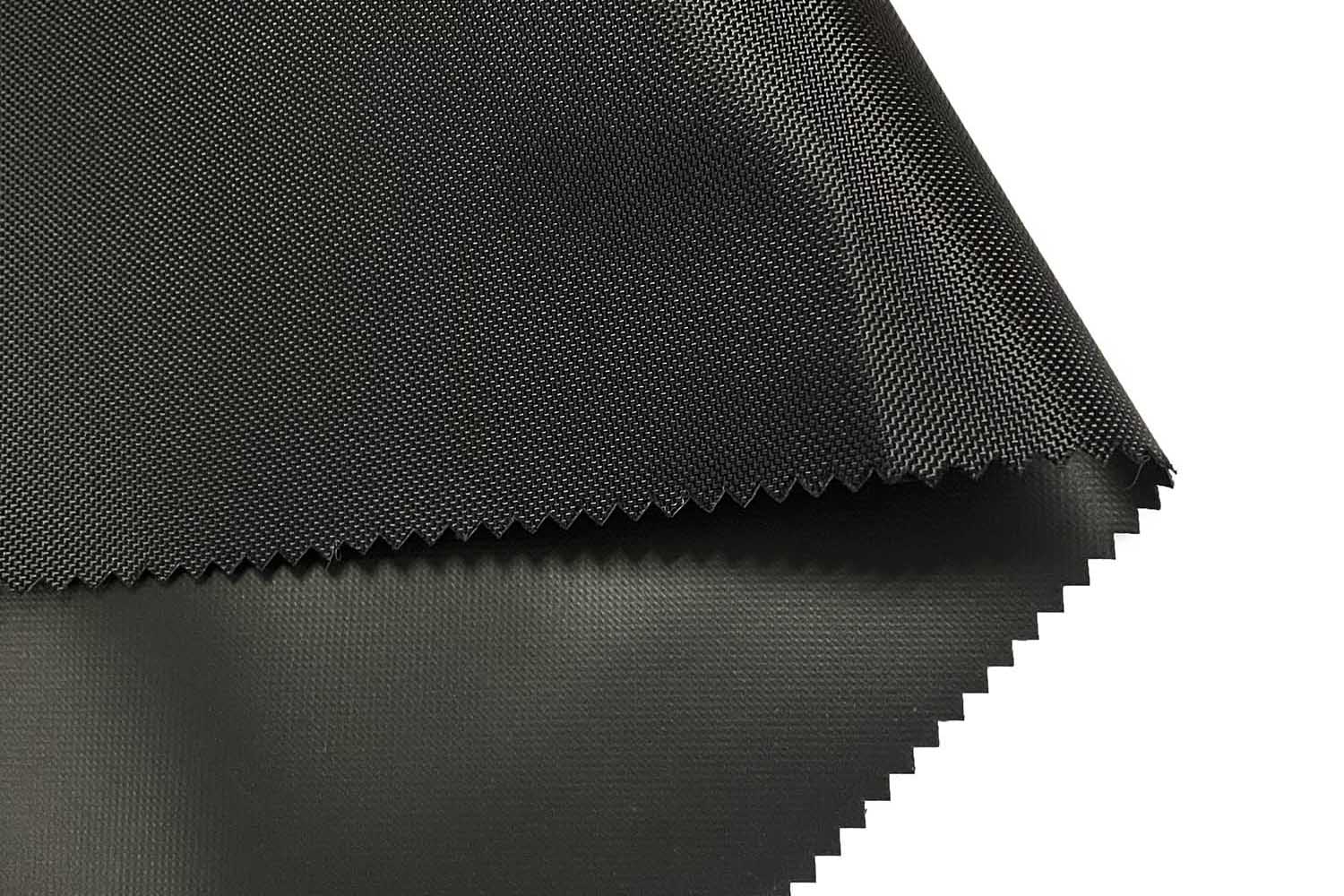 840D PVC-Coated Polyester Oxford FabricHeavy-duty 455 gsm PVC-backed 840D polyester Oxford in 58-inch width, suited to bags, backpacks and covers where a waterproof back face is needed.View Product →
PE, PEVA and TPE
These chlorine-free systems sit between PU and PVC on cost and performance. TPE has become popular for cooler-climate bags because it stays flexible and does not crack the way PVC can. PEVA is common in food-adjacent and children's products where chlorine-free construction is a selling point.
Specialty finishes
Silicone coating gives ripstop a slick, low-friction hand and excellent tear resistance for tents. Silver coating reflects radiant heat and is standard on sunshade and awning material. Aluminium foil lamination is used where heat retention matters, and there are also antibacterial, antistatic, oil-repellent and flame-retardant treatments that get applied at the finishing stage. Our waterproof oxford fabric range covers the standard builds if you want to compare hydrostatic ratings side by side.
Weave and Pattern: The Part Buyers Underrate
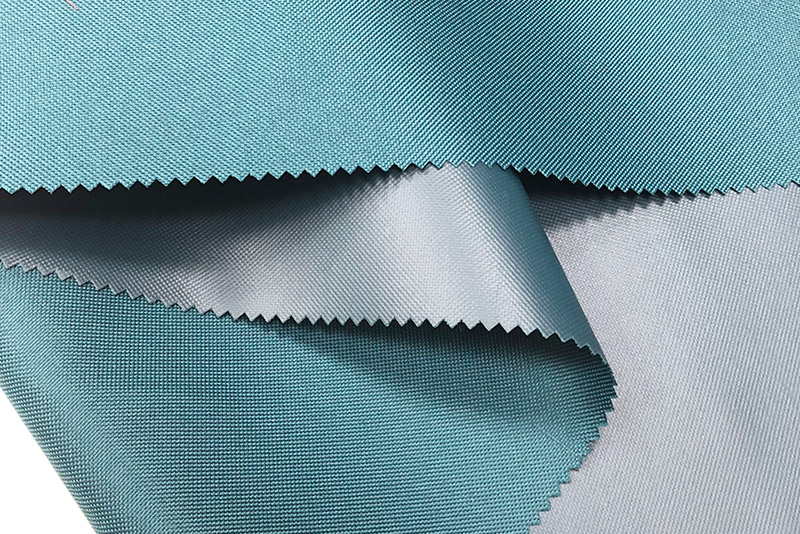
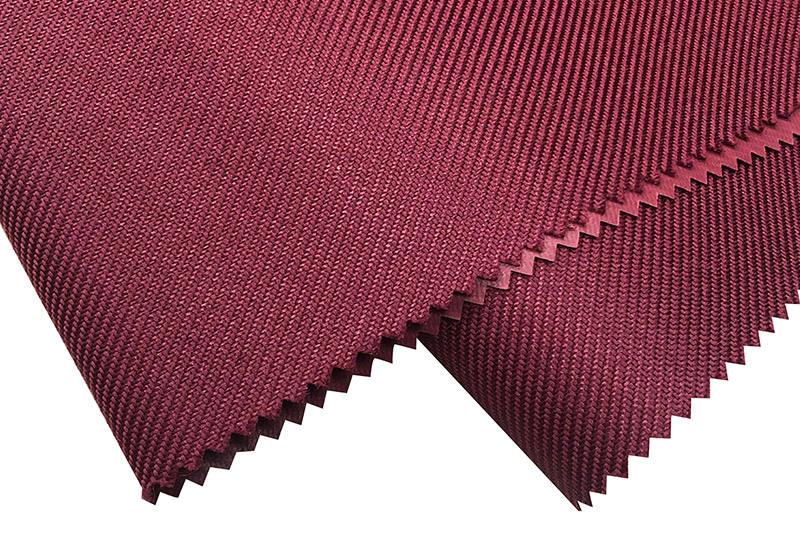
Weave is where a supplier can rescue a design. A plain weave is the cheapest and most predictable. Twill adds a diagonal line and a softer drape. Ripstop introduces a heavier yarn at intervals — 2mm, 3–5mm, 4mm, 6mm or 7mm grids are common — which stops a small tear from running. Dobby and jacquard constructions create texture without printing: honeycomb, herringbone, diamond, football patterns and double-line effects all come out of the loom rather than the print table.
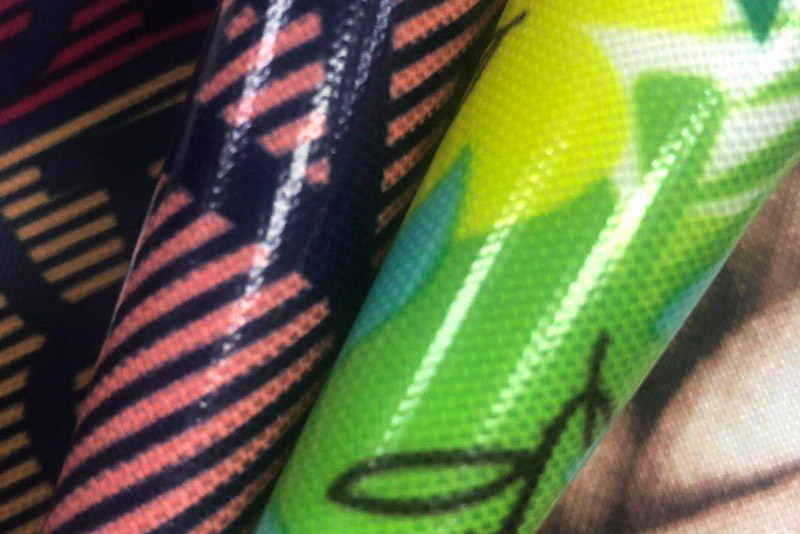
Then there are the colour tricks. Two-tone fabric woven from cationic and regular polyester yarns takes two different shades in a single dye bath, producing that iridescent shift that reads as premium at retail. Solution-dyed yarns hold colour through abrasion far better than piece-dyed ones. And for anything graphic, we hold more than two thousand print designs and can develop to your artwork.
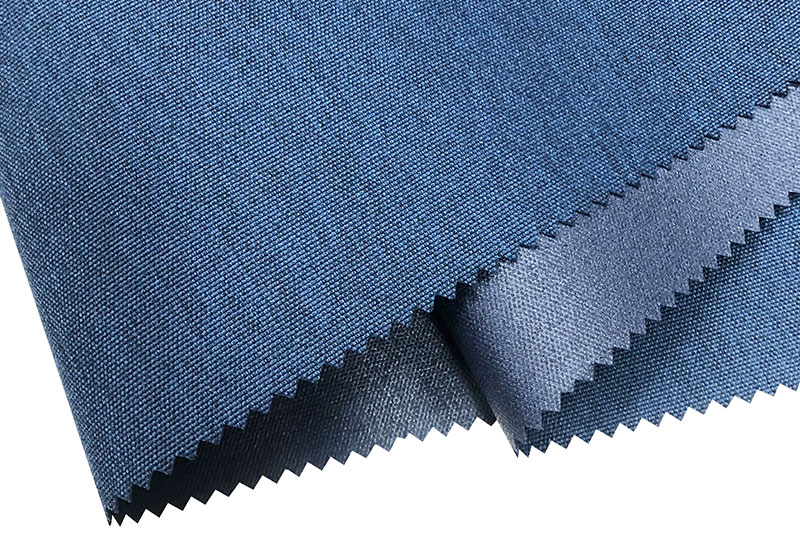
 600D Honeycomb PU Ripstop Oxford FabricWaterproof 180 gsm PU-backed 600D polyester Oxford with football-pattern ripstop, positioned for backpack and bag applications and available in custom colours.View Product →
Where Oxford Fabric Earns Its Keep
The applications are broader than most people assume, and each one pulls the specification in a different direction:
- Backpacks, duffels, trolley cases and business bags, where abrasion resistance and a clean surface finish matter most.
- Tents, fishing shelters and camping gear, where weight, packability and flame retardancy usually win.
- Awnings, sunshades and outdoor blinds, where UV resistance and heat reflection drive the choice.
- Patio furniture covers, boat covers and industrial tarpaulins, where hydrostatic head and tear strength outweigh aesthetics.
- Medical and protective products, where antibacterial or antistatic finishing is a requirement rather than a bonus.
- Pet beds, carriers and outdoor cushions, which need durability plus something soft enough for an animal to lie on.
How We Would Narrow Down a Specification
Most enquiries arrive as a single line — "600D PU, black, waterproof" — and most of them need three or four more answers before a quote is meaningful. The sequence we usually work through is:
- Start from the product, not the fabric. What will it carry, how often will it be folded, and what must never happen to it.
- Choose the denier, then adjust thread count rather than jumping to the next weight if you only need a little more strength.
- Pick the coating and the hydrostatic head, and decide whether one pass or two is justified by the abrasion the inside of the product will see.
- Decide on weave and colour method — piece-dyed, solution-dyed, two-tone or printed — because this is where lead time changes most.
- Confirm the finishing treatments, and confirm which of them need certification paperwork.
- Agree the tolerance on weight, shade and width before the bulk run, not after.
That last point deserves emphasis. Shade variation between a lab dip and a bulk roll is the single most common cause of disputes in this industry, and it is almost always a communication problem rather than a production failure. Ask for a bulk-production sample from the actual lot, and keep a retained piece.
Sustainability, Care and the Paperwork
Recycled polyester is no longer a niche request. We produce 100% RPET and 50% RPET builds, some with GRS certification, and the mechanical performance is close enough to virgin polyester that most buyers cannot tell the difference by hand. What does differ is documentation and traceability, so it is worth agreeing early on which certificates travel with the shipment.
For care instructions, oxford fabric is undemanding: wipe with mild soap and water, avoid prolonged sun exposure for coated goods, and never machine-dry a PU or PVC back face at high heat. Store folded rather than compressed, and let anything that has been rained on dry fully before packing it away — mildew is a storage problem far more often than a manufacturing one.
Oxford fabric is not complicated once you stop treating it as a single product. It is a construction, a yarn weight, a weave and a coating that can be combined in thousands of ways, and the useful conversation is always about which combination your product actually needs. If you are working through a specification and want a second opinion on denier, coating or finishing, our team is happy to look at it — that is the part of the job we have been doing for more than two decades.

 Tel: +86-571-22917799
 Fax: +86-571-82799678
 E-mail:
 Add: No.88 Yinxin Rd.,Yaqian Town,Hangzhou City, Zhejiang, China.