+86-571-22917799




 English
 简体中文
 русский
 Español
Content
- 1 What Outdoor Fabric Has to Do That Indoor Fabric Doesn't
- 2 Start With the Base Cloth: Denier, Weave and Yarn
- 3 Coatings and Backings Do the Heavy Lifting
- 4 Finishes That Answer One Specific Question
- 5 Matching the Cloth to the Job
- 6 Recycled Content Without Giving Up Performance
- 7 How We'd Advise You to Specify and Test
- 8 Questions Buyers Ask Us Most
If you have ever unzipped a three-year-old backpack and found the lining dusting off in your fingers, or watched a patio cover go chalky after one summer, you already understand why outdoor fabric is not a single product but a whole set of compromises stacked on top of each other. Sun, rain, abrasion, folding, cleaning chemicals and temperature swings all attack the same piece of cloth at once, and the fabric usually fails at whichever point was specified least carefully.
We have been weaving and coating polyester oxford cloth in Hangzhou since 2002, and most of the questions that reach us are not really about fabrics in general — they are about one specific failure someone has already lived through. This guide walks through the decisions in the order they actually matter: base cloth, coating, finish, then testing.
What Outdoor Fabric Has to Do That Indoor Fabric Doesn't
An indoor textile mainly needs to look right and feel right. An outdoor textile has a job description that reads more like a piece of equipment. It has to hold its strength when wet, resist ultraviolet degradation that quietly breaks polymer chains, keep a seam from pulling open under load, and stay flexible enough in cold weather that it does not crack when folded.
That is why the same 600D construction can behave like two completely different materials depending on what happens after weaving. The greige roll coming off the loom is only the starting point. The coating, the finish and the testing regime are what turn it into something that belongs outside.
Start With the Base Cloth: Denier, Weave and Yarn
Denier describes yarn thickness, not fabric strength, and it is the most misunderstood number in the trade. A 600D cloth woven at low density can be weaker than a well-built 420D. What denier really tells you is how much material is in each thread, which in turn hints at abrasion tolerance, stitch-holding ability and how the fabric will drape.
Yarn type matters just as much. FDY polyester gives a clean, uniform surface that prints and coats predictably. DTY polyester is textured, softer in hand and more forgiving when folded repeatedly. Cationic yarn takes dye differently from standard polyester, which is how two-tone effects are produced without printing. Nylon brings higher tensile and tear strength but costs more and takes a different coating recipe.
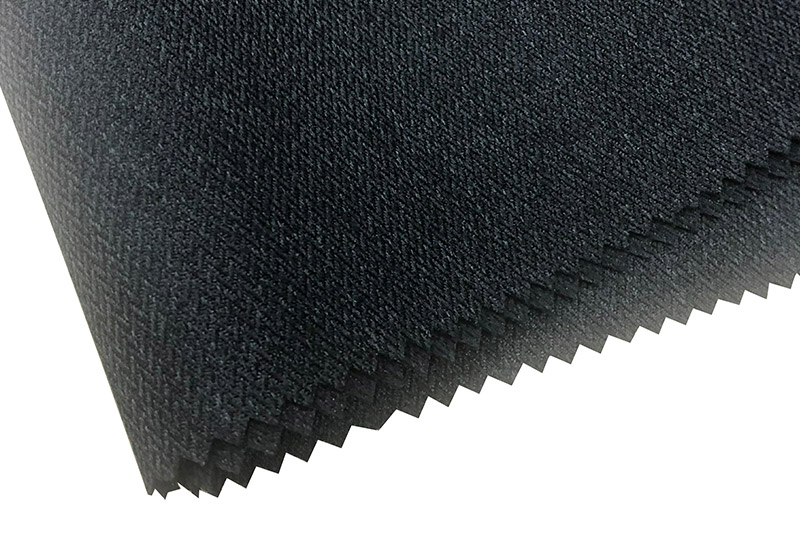
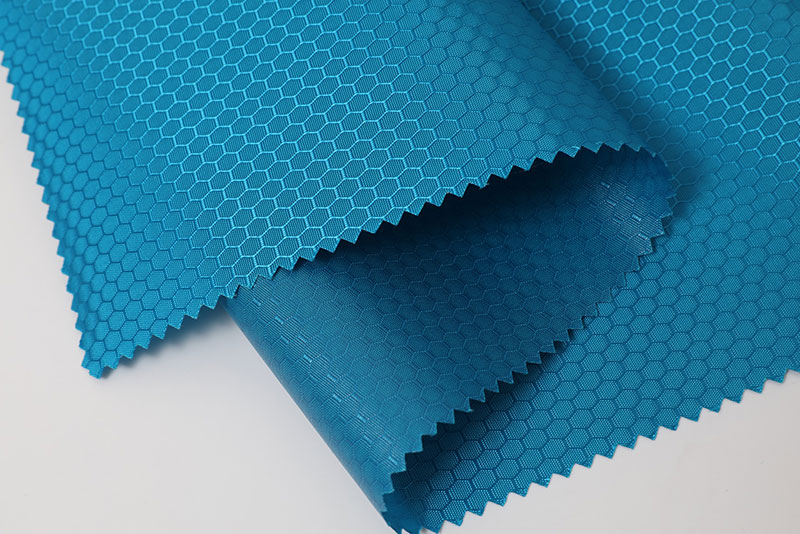
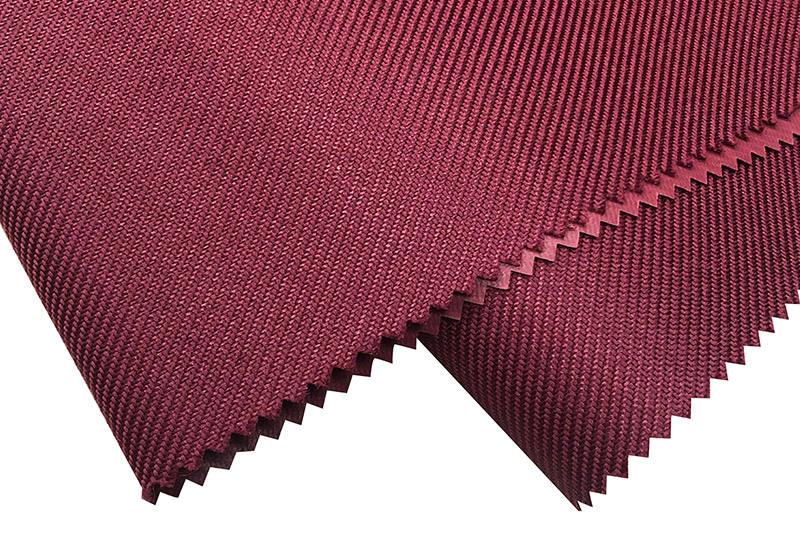
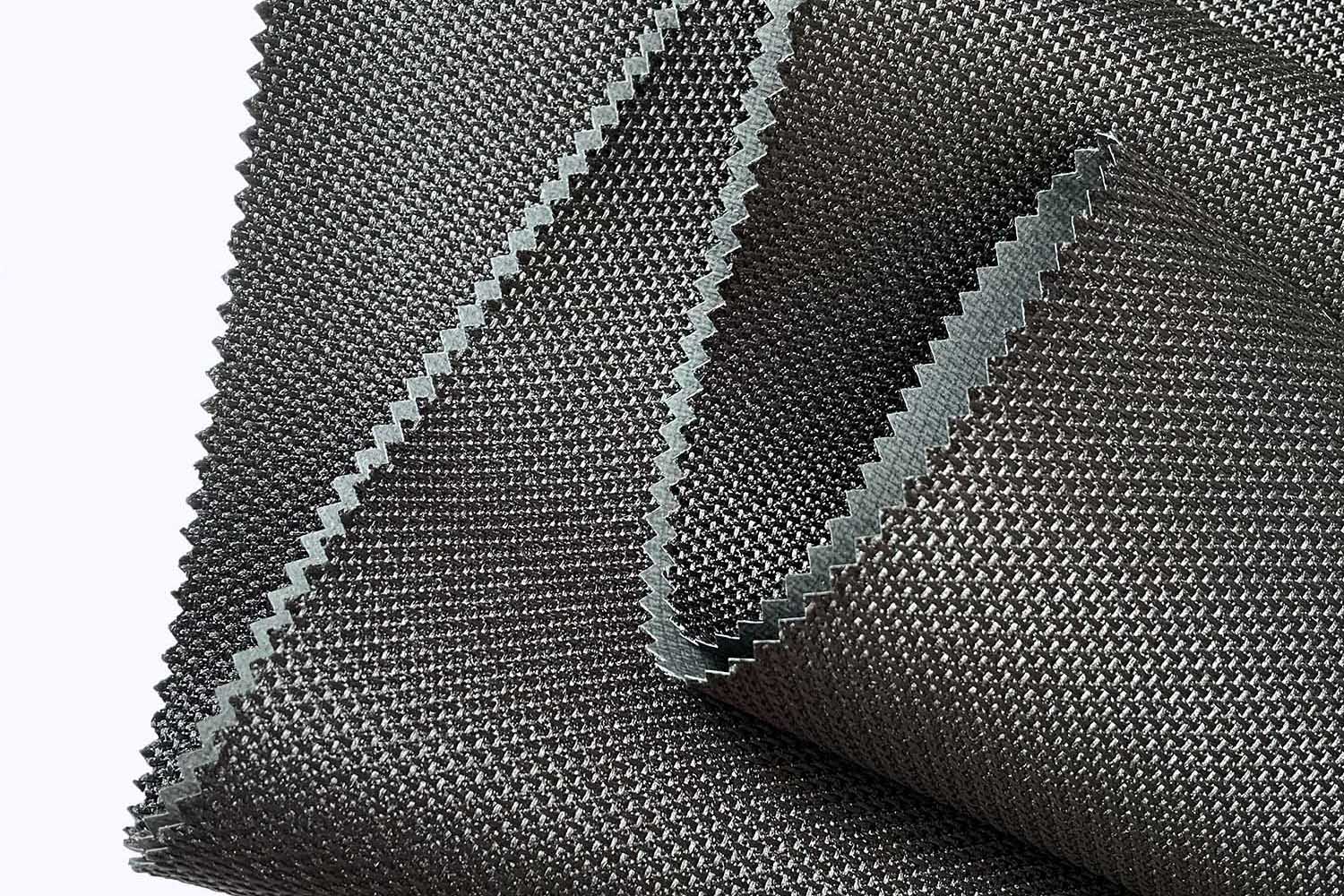
Weave decides how the cloth behaves under stress. Plain weave is the workhorse. Twill is denser and smoother. Ripstop introduces thicker yarns at intervals so a small tear stops at the grid line instead of running. Honeycomb, diamond, herringbone and jacquard structures add both mechanical performance and surface interest, which is why bag designers often pick them for visible panels.
| Weight class | Where it usually lands | What changes as you go up |
|---|---|---|
| 210D – 300D | Linings, pouches, lightweight daypacks | Lighter hand, easier packing, less abrasion margin |
| 420D – 600D | Backpacks, duffels, chair covers, tent bodies | Balanced strength-to-weight, good stitch retention |
| 840D – 900D | Tool bags, tarpaulins, equipment covers | Higher tear resistance, heavier rolls, stiffer seams |
| 1200D – 1680D | Industrial covers, heavy-duty luggage, ballistic styles | Maximum abrasion tolerance, significant weight penalty |
Coatings and Backings Do the Heavy Lifting
Coating is where most outdoor performance is actually won or lost. A PU coating is measured by hydrostatic head, and the numbers we routinely run — 1,000mm, 1,500mm, 2,000mm, 3,000mm — each suit a different exposure level. A 1,000mm back panel is fine inside a bag; a tent floor or a cover that sits in standing water needs considerably more. PU keeps the fabric flexible and quiet, which is why it dominates bag and apparel applications.
PVC is the other classic answer. It is heavier, extremely waterproof and can be high-frequency welded rather than stitched, so the seam is often stronger than the surrounding material. For tarpaulins, boat covers and industrial curtains, that weldability is worth the weight. TPE, PE and PEVA laminates sit in between and are chosen when a project wants a chlorine-free construction or a softer, less plasticky hand.
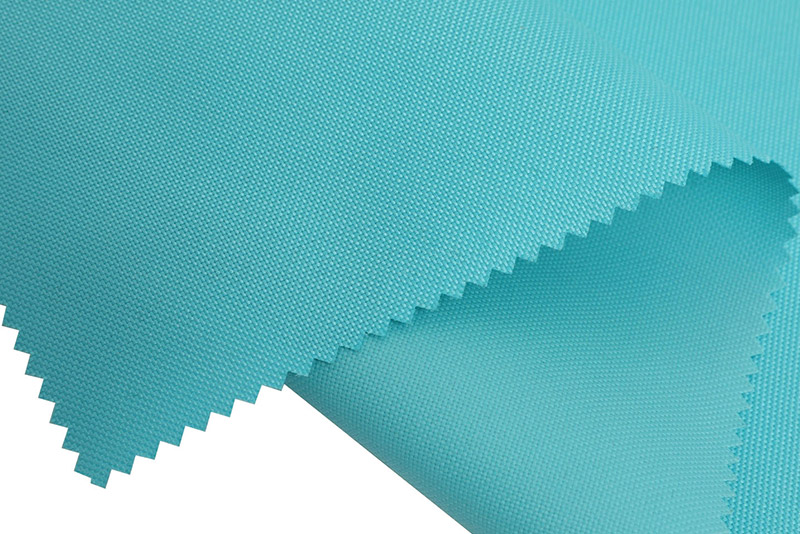
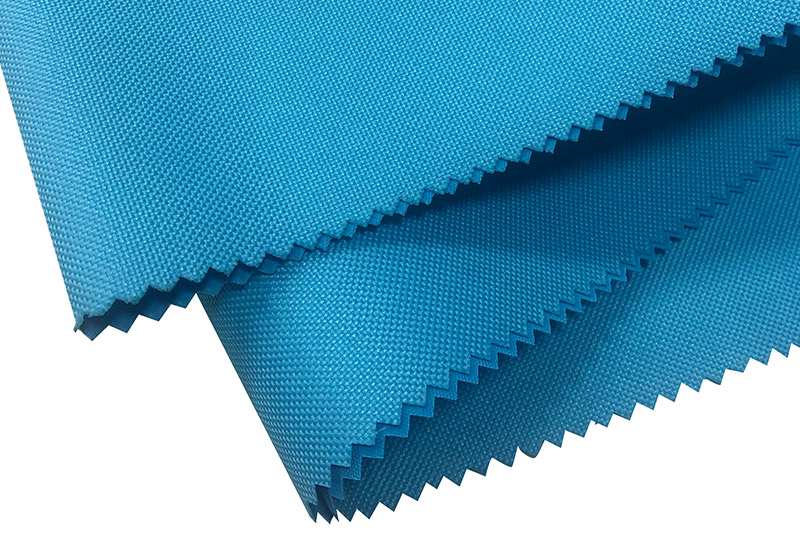
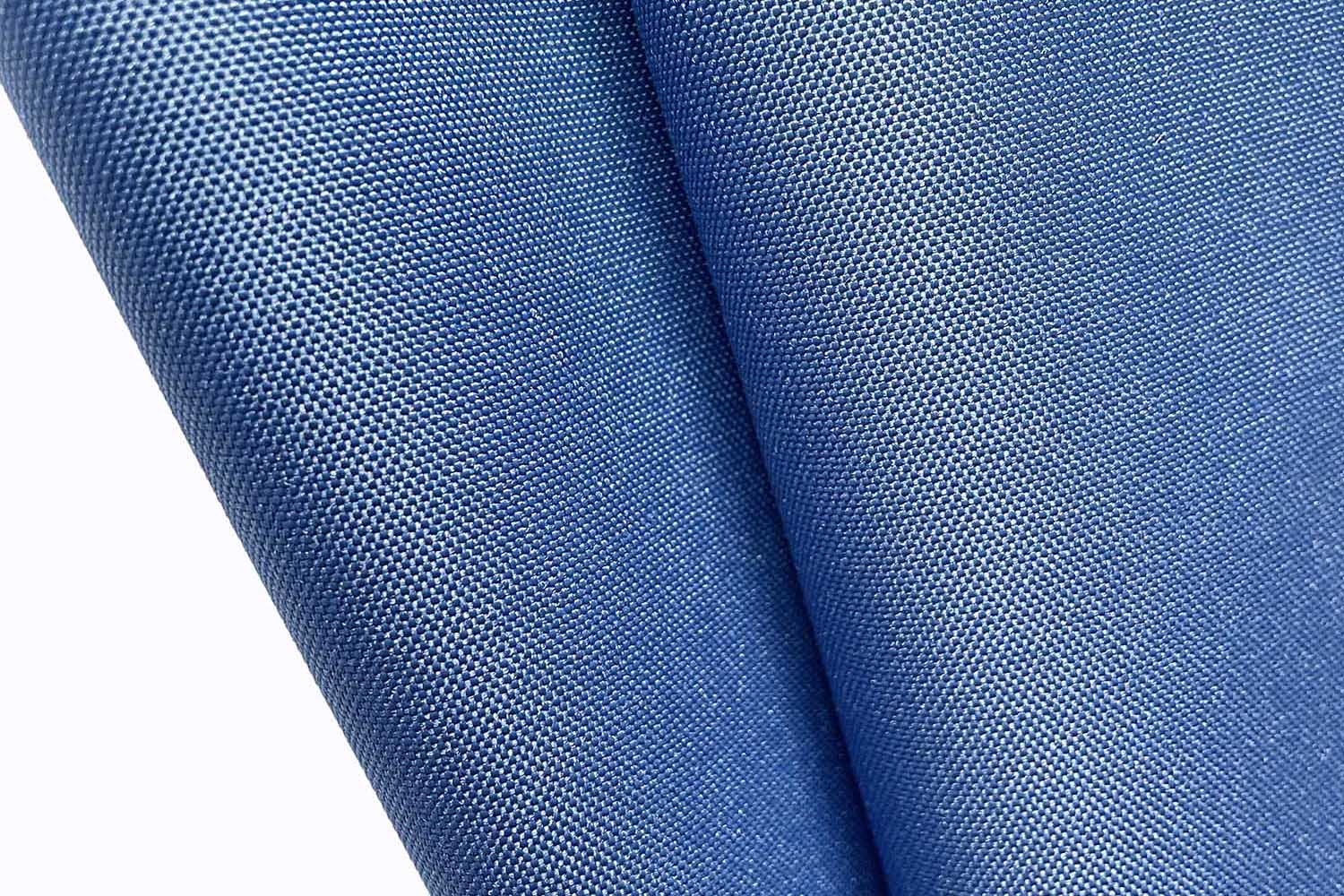 600D PU-Coated Polyester Oxford Waterproof FabricA 600D, 90T polyester Oxford with PU backing and 1,500 mm waterproofing, suited to bags, tents and outdoor covers; custom colors and REACH/ROHS/EN71-3 compliance.View Product →
Beyond waterproofing, backings change how cloth meets the world. Silicone coatings add slip and heat resistance. Silver coating reflects light and heat for shade and sunshade products. Aluminum foil lamination pushes reflectivity further for heat-sensitive environments. Each of these is a deliberate trade: you gain a property and usually give up some breathability, softness or cost efficiency.
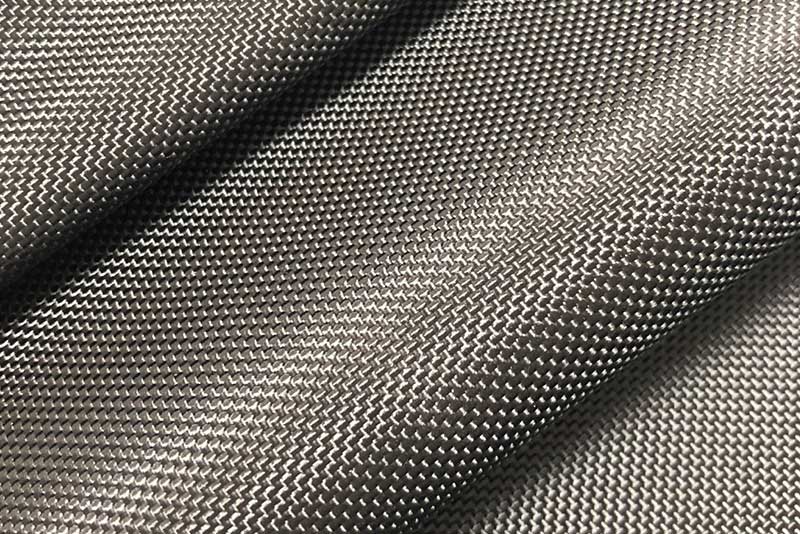
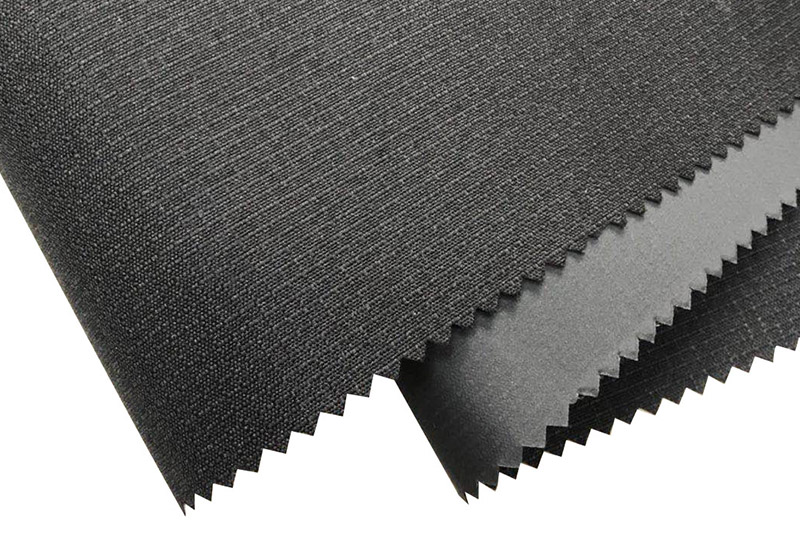
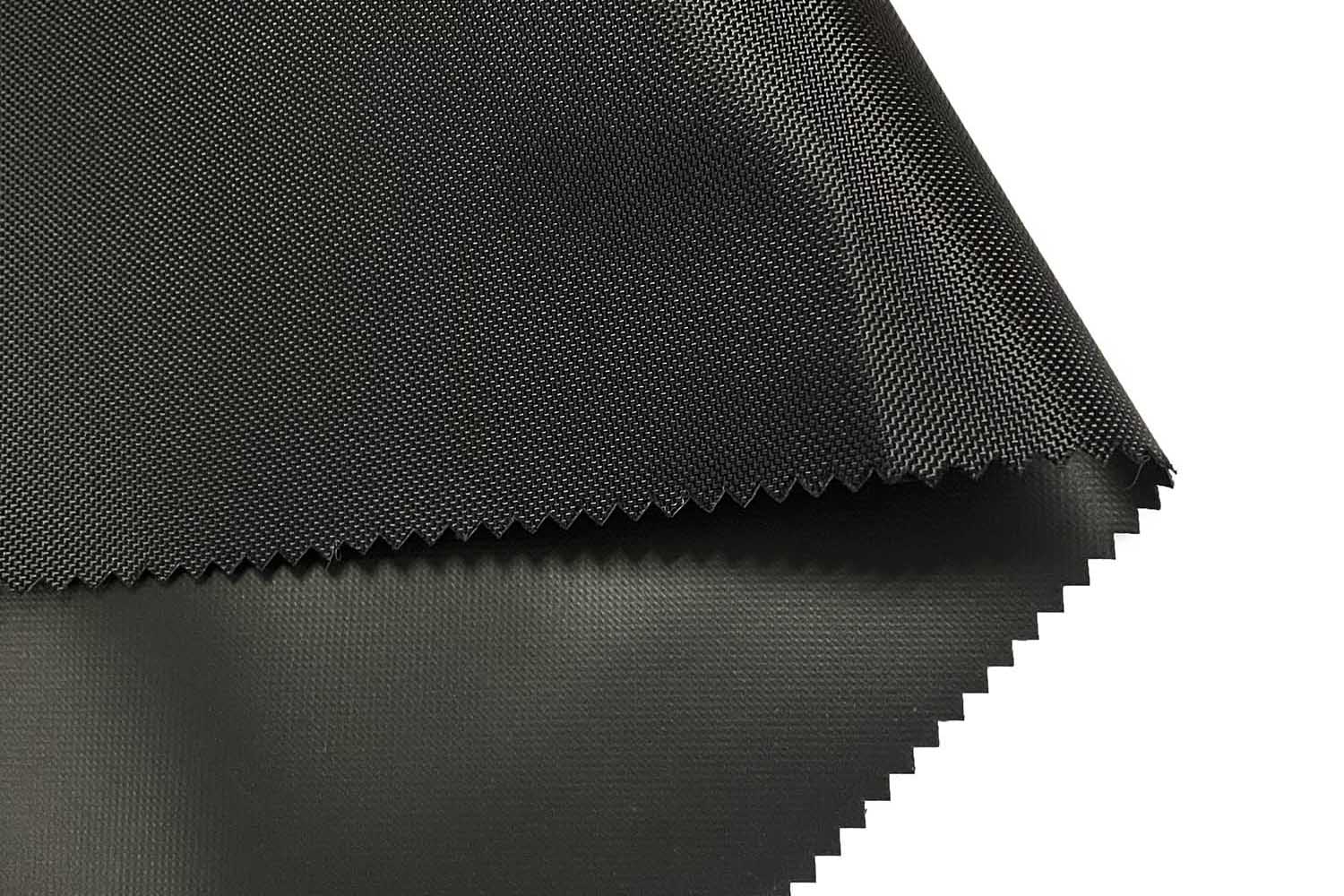 840D PVC-Coated Polyester Oxford FabricHeavyweight 840D polyester Oxford with PVC backing at 455 gsm, intended for bags, backpacks, tents and outdoor furniture covers; custom colors and standard compliance available.View Product →
Finishes That Answer One Specific Question
Functional finishes are best understood as answers to a single question the end product cannot avoid. Will this sit in direct sun for years? Then UV stabilization is not optional, because polyester left unprotected loses strength faster than most buyers expect. Will it stand near a flame? Then a fire-retardant treatment and the relevant standard need to be agreed before the first meter is woven, not after.
Other finishes solve narrower problems: antibacterial treatment for medical and hygiene-adjacent uses, antistatic treatment for electronics handling, oil repellency for industrial covers, anti-slip backing for furniture covers, and fluorescent high-visibility dyeing for safety products. The important point is that finishes interact. A heavily coated fabric is harder to treat, and a print may not survive certain finishing lines. Sequencing matters as much as chemistry — our UV-resistant outdoor fabric range, for example, is engineered so the stabilizer is not buried under a coating that blocks its effect.
Matching the Cloth to the Job
Most sourcing errors come from choosing fabric by habit rather than by application. A rough map of where different constructions tend to fit:
- Backpacks and duffels: 420D to 600D oxford with PU coating, often two-tone or jacquard for visible panels, plus a lighter 210D lining.
- Tents and camping gear: ripstop constructions with PU or silicone coating, fire-retardant treatment where regulations require it, and a hydrostatic head matched to the expected weather.
- Patio furniture covers: high-density 600D plain weave with heavier PU and UV stabilization; the fabric must resist both sun and long-term moisture.
- Boat and marine covers: 600D to 900D with a tough coating, good cold-crack behavior and welded or taped seams.
- Awnings and sunshades: breathable or silver-coated options where heat reflection and airflow matter more than total waterproofing.
- Industrial tarpaulins: 840D to 1680D PVC-coated cloth, weldable, with high tear strength for wind load.
- Pet and hygienic products: coated oxford with antibacterial or easy-clean finishes and rounded, non-scratching hand.
Where the load is genuinely industrial — wind, sand, repeated folding over metal edges — heavier constructions earn their weight. Our heavy-duty polyester fabric pages outline the denier and coating combinations we usually recommend for those conditions.
Recycled Content Without Giving Up Performance
Recycled polyester has moved well past the novelty stage. We now run 100% RPET and 50% RPET constructions, some with GRS certification, in the same deniers and coatings as virgin cloth. In practice, a 500D recycled oxford with a PU back can meet the same waterproof and abrasion targets as its conventional counterpart, provided the yarn supply and the coating Recipe are controlled together.
 500D RPET Oxford with PU CoatingRecycled PET Oxford in 500D, 72T and 165 gsm with PU backing, positioned for bags and outdoor covers where recycled content and waterproof performance matter.View Product →
Solution-dyed polyester is worth mentioning alongside recycled content, because it addresses a different worry: colorfastness. Pigment added in the polymer stage rather than at the dye bath gives noticeably better resistance to fading and to washing, which is why it suits outdoor furniture and shade products that cannot be re-dyed once installed.
How We'd Advise You to Specify and Test
Write the specification around the finished product's worst day, not its average one. If a cover will be left outside through a rainy autumn, test at the hydrostatic head that condition implies. If a bag will be dragged across concrete, ask for abrasion data, not just a denier figure.
The tests that settle most arguments are straightforward: hydrostatic head for waterproofing, Martindale or Taber for abrasion, grab tensile and tear strength for mechanical behavior, colorfastness to light and to rubbing, cold-crack resistance for anything used in winter, and seam strength on the actual assembly. Color approval under more than one light source also saves a great deal of correspondence later, because a sample that matches under office lighting can look different outdoors.
On the production side, our mill in Hangzhou runs its own yarn, weaving, printing and coating equipment, with annual capacity around 30 million meters. That vertical setup is mainly useful for one reason: when a coating recipe or a print needs adjusting, the conversation happens inside the building rather than across three suppliers. Being close to Ningbo and Shanghai ports also keeps export scheduling reasonably simple for buyers in South America, Eastern Europe, Western Europe and South Asia.
Questions Buyers Ask Us Most
Is higher denier always better?
No. Higher denier adds material and weight, but abrasion resistance also depends on weave density, yarn quality and coating adhesion. A well-specified 600D frequently outperforms a loosely woven 900D for the same job, and it will be lighter and cheaper to ship.
PU or PVC?
Choose PU when flexibility, softer hand and quieter drape matter — bags, apparel, tent bodies. Choose PVC when you need maximum waterproofing, weldable seams and high tear strength — tarpaulins, marine covers, industrial curtains. Many product ranges reasonably use both in different panels.
Can you print our own design?
Yes. We hold a large library of existing patterns and regularly produce customer artwork on print-ready base cloth, with the coating applied afterward so the print stays protected. Embossing and two-tone effects are also available where a design needs texture rather than color.
Outdoor fabric rewards buyers who specify in layers. Get the base cloth right for the mechanical job, choose the coating for the exposure, add only the finishes that solve a real problem, and confirm everything with a test that resembles the end use. Do that, and the fabric stops being a line item on a purchase order and becomes the part of the product nobody has to think about again — which is exactly what a good outdoor material should be.

 Tel: +86-571-22917799
 Fax: +86-571-82799678
 E-mail:
 Add: No.88 Yinxin Rd.,Yaqian Town,Hangzhou City, Zhejiang, China.